

Overview
The Gizmo Watch 3 Photo Backup experience was designed to help families preserve photos captured on the watch while addressing the device’s limited onboard storage. To maintain performance, Gizmo Watch automatically removes older content as storage capacity increases, creating a need for a simple way to save meaningful photos before they are deleted. This initiative focused on creating a seamless photo backup experience while establishing a scalable foundation for future backup capabilities across additional content types.
Problem:
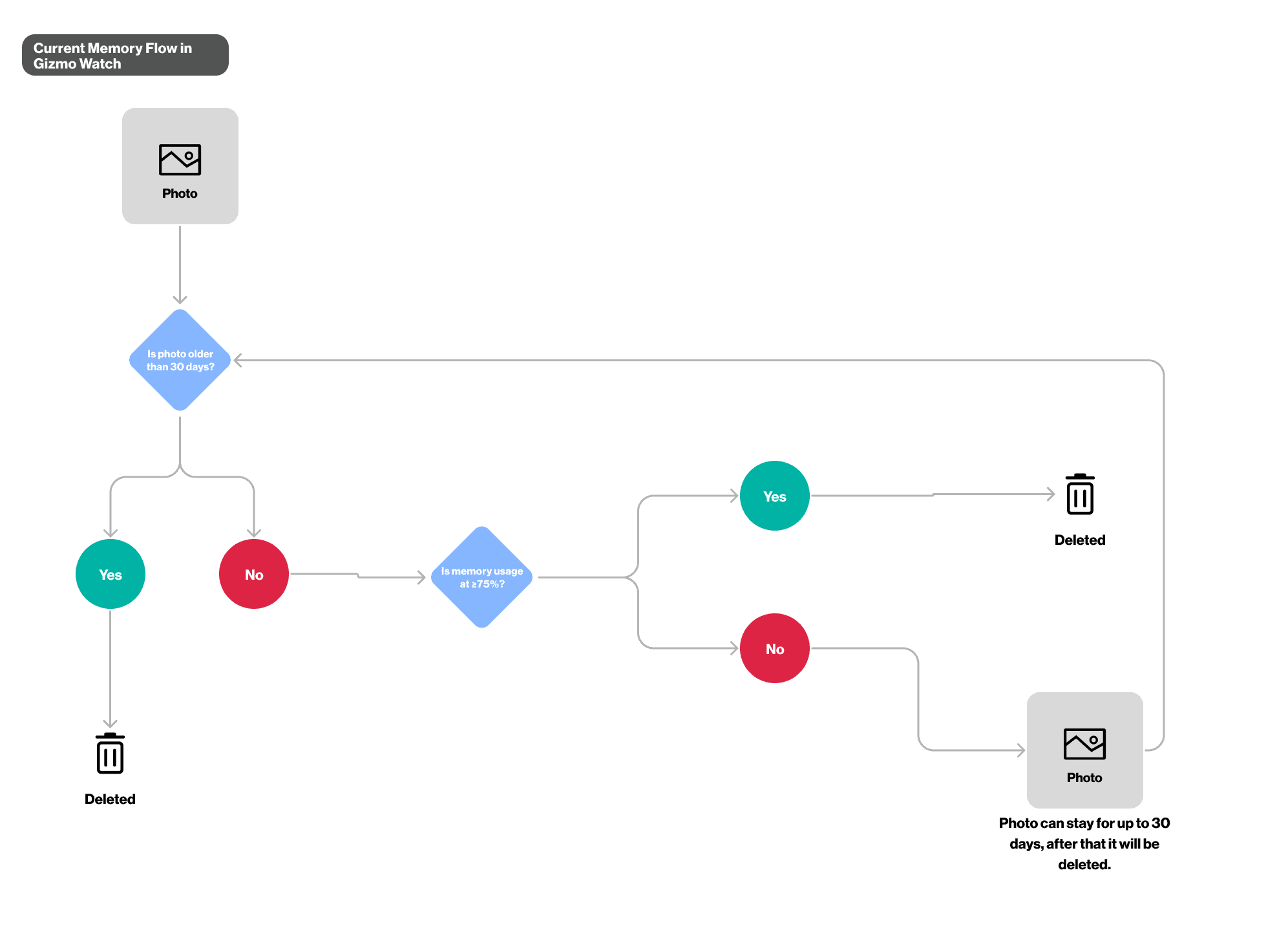
Gizmo Watch 3 has limited storage and must maintain its memory usage at approximately 70% to ensure reliable performance. When storage reaches 75%, the device automatically begins deleting the oldest content, and messages and media older than 30 days may also be removed.
For families, this meant that photos captured by their child could be permanently lost without an easy way to preserve them. We needed to create an intuitive backup experience that gave parents greater control over their child’s photos while continuing to support the watch’s storage and performance requirements.
Goal:
Create a simple and reliable way for families to preserve photos captured on Gizmo Watch 3 before they are automatically removed due to storage limitations, while designing a scalable backup experience that could support additional content types in the future.
My role:
Led the end-to-end design, from defining the user problem and experience strategy through MVP and post-MVP. I partnered closely with Product and Engineering to understand device storage constraints, translate technical requirements into a simple parent-facing experience, and identify opportunities to scale the solution beyond photo backup.
Responsibilities:
Guided and led experience direction.
Defined customer journeys and future-state experiences across the Verizon Family ecosystem.
Established scalable design frameworks and experience patterns to support future growth.
Facilitated workshops and alignment sessions with Product, Engineering, and Research teams.
User Flows
A Senior Product Designer on my team mapped the current-state experience across the Gizmo Watch and companion mobile app to understand how photos were captured, stored, and removed from the device. I provided feedback and guidance as we defined the future-state experience, ensuring the flows accounted for both watch and mobile interactions, technical constraints, and the broader backup strategy.
Current State
Future State


Design
During the design process, we collaborated closely with engineering and Smartcom to create the photo backup experience. MVP was focused purely on photo backup, while post-MVP would incorporate more storage with Verizon Cloud integration and additional file types.
Customer Education
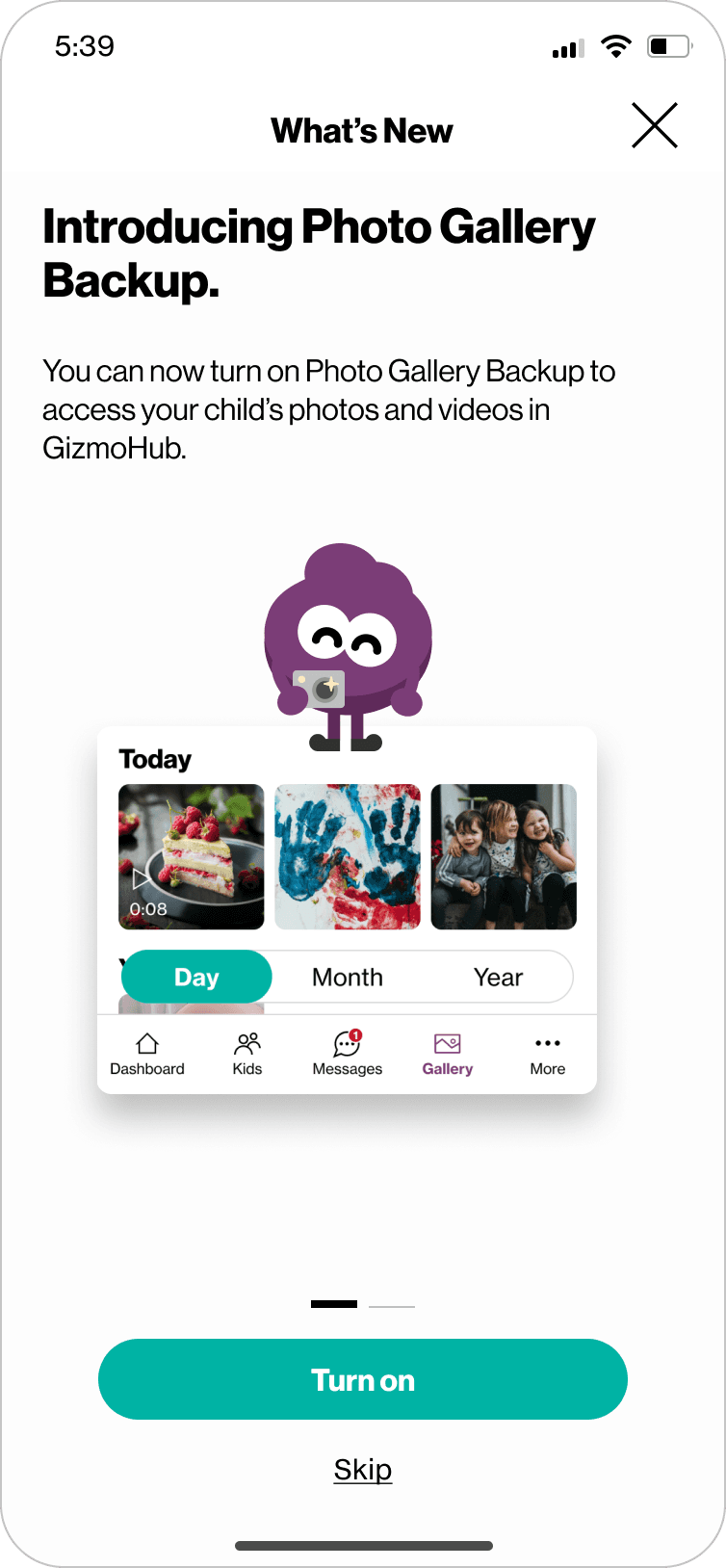
Since the photo backup experience was new to the companion app, we needed to educate parents on the experience.



Backup
We leveraged existing design templates from Verizon Cloud to showcase the gallery and backup status.


Settings
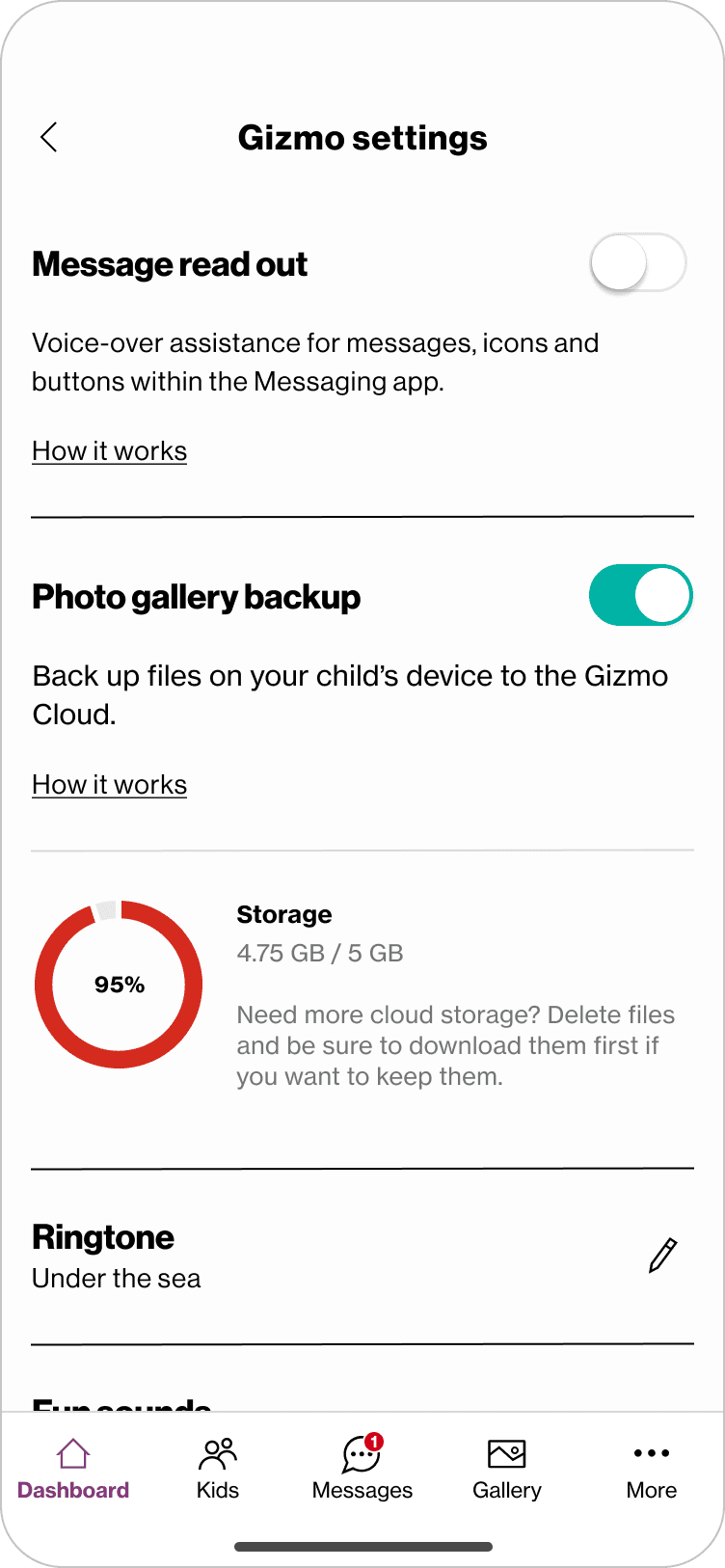
We incorporated the backup settings into the existing device settings on the companion app. 5GB is the full storage limit for MVP, with plans to expand raise the threshold.


Compatible Watches
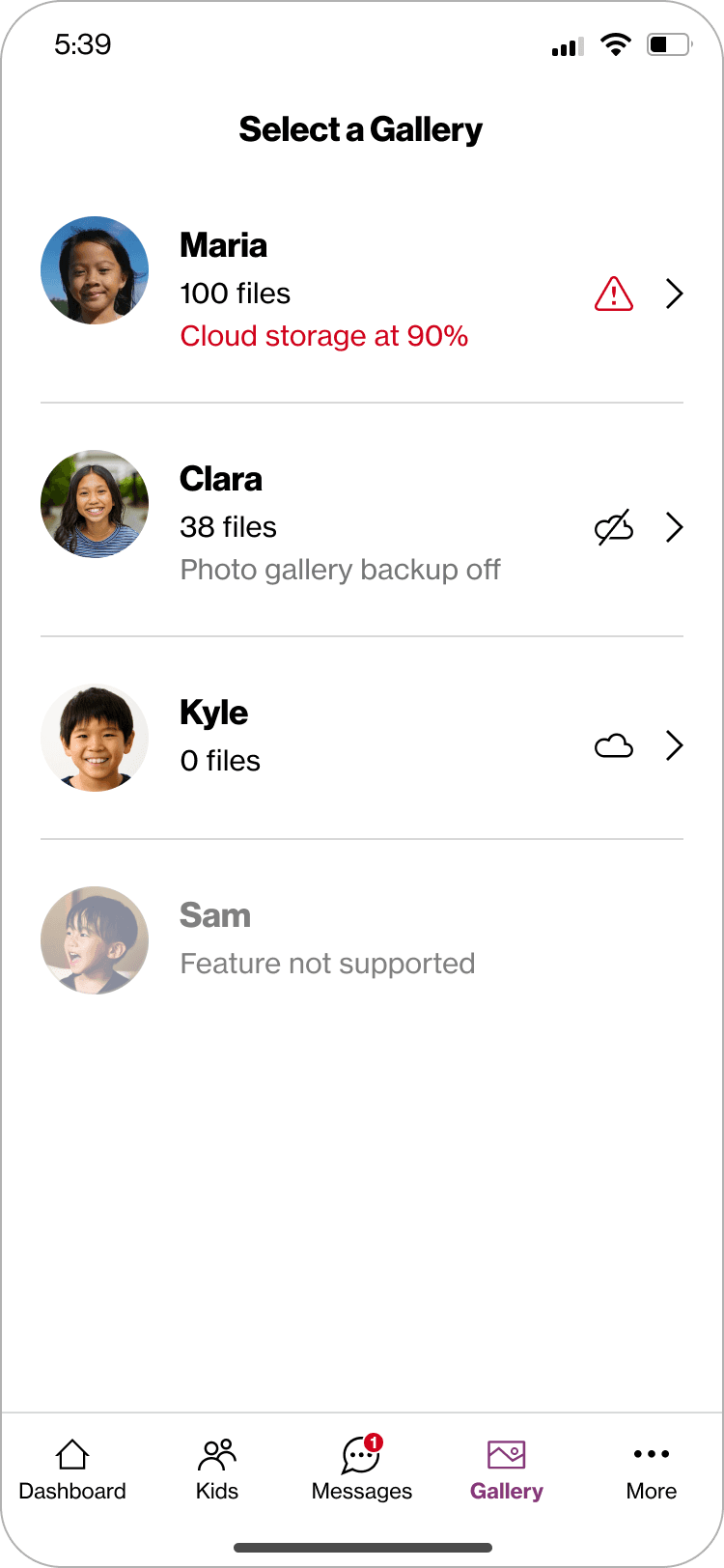
At the time of launch we had various Gizmo watches in the market including the Gizmo Watch 2, Gizmo Disney, Gizmo Adventure, and Gizmo Watch 3. Some watches were not compatible with the photo backup experience since they didn't have a camera. This was an important consideration as we were designing for scale and various use cases.


Outcome
The Photo Backup experience launched in March 2025, extending the Gizmo ecosystem with a more reliable way for families to preserve meaningful photos before they are removed from the watch. The experience reached more than 3.5 million Gizmo customers and established a scalable foundation for future backup capabilities across additional content types.
Takeways
Impact:
The Photo Backup experience addressed an important need within a highly engaged Gizmo ecosystem, giving families a way to preserve meaningful photos before they were automatically removed from the watch. By introducing backup capabilities across the watch and mobile experience, we reduced the risk of losing personal content while creating a scalable foundation for future media backup.
The broader scale of Gizmo reinforces the opportunity: families generated more than a billion minutes of shared communication in a single year, demonstrating how frequently children and caregivers use the watch to stay connected and capture meaningful moments.
What I learned:
This initiative reinforced the importance of designing for the entire connected-device ecosystem rather than treating the watch and mobile app as separate experiences. Translating complex storage and device constraints into a simple customer experience required close collaboration between Design, Product, and Engineering.
As the design leader, I also learned the value of giving designers ownership of the detailed solution while providing the strategic direction and guardrails needed to ensure the experience could scale beyond the immediate use case. Designing Photo Backup as part of a broader backup framework allowed us to solve the near-term customer need while creating a foundation for future content types.